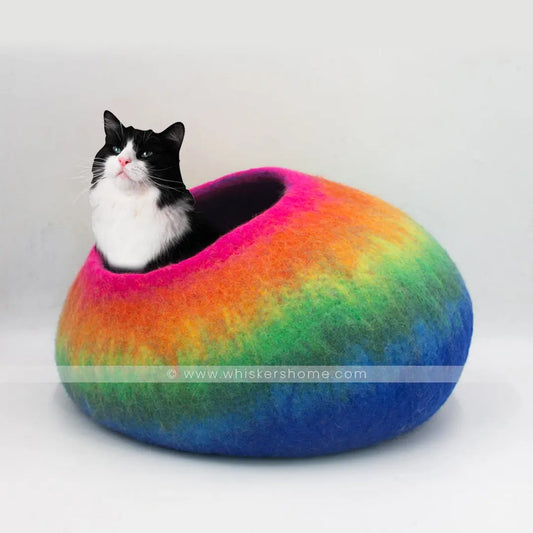
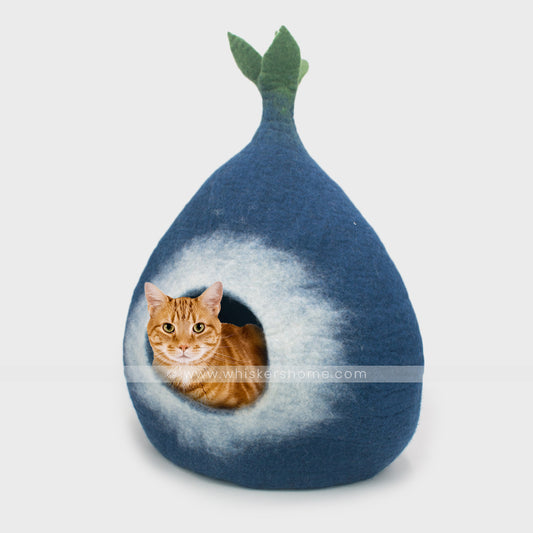


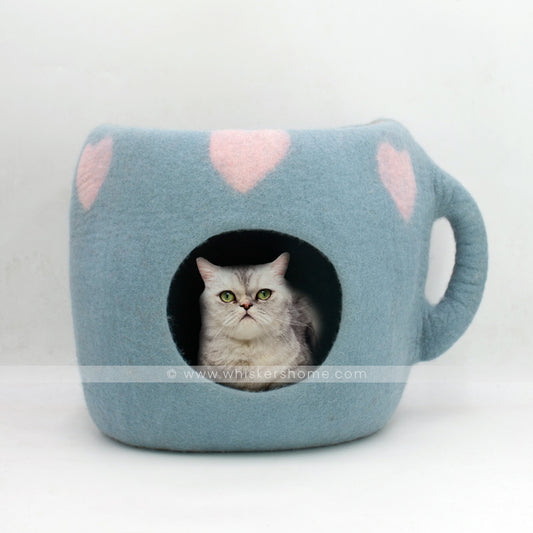


Choosing the right cat cave size is one of the most important decisions you'll make for your cat's comfort. Too small and your cat won't use it; too large and it loses that cozy, den-like feeling cats instinctively love. Here's everything you need to know.
Why Size Matters for Cat Caves
Cats are den animals by nature. In the wild, they seek out small, enclosed spaces that feel safe and protected. A well-sized cat cave mimics this instinct perfectly — your cat should be able to curl up snugly inside without feeling cramped. The goal is a space that's just right: enough room to turn around and settle, but snug enough to feel secure.
General Sizing Guide by Cat Weight
- Small cats (under 4 kg / 9 lbs): A cave with an opening of approximately 18–20 cm (7–8 inches) and an interior diameter of 30–35 cm (12–14 inches) works beautifully. Kittens and petite breeds like Singapura or Devon Rex fall into this category.
- Medium cats (4–6 kg / 9–13 lbs): This is the most common size range, covering breeds like domestic shorthairs, Siamese, and Abyssinians. Look for an opening of 20–23 cm (8–9 inches) and an interior of 35–40 cm (14–16 inches).
- Large cats (6–8 kg / 13–18 lbs): Maine Coons, Ragdolls, Norwegian Forest Cats, and other large breeds need a more generous cave. An opening of 23–26 cm (9–10 inches) and an interior of 40–45 cm (16–18 inches) ensures they can enter and exit comfortably

How to Measure Your Cat
The simplest method: measure your cat's shoulder width while they're standing. Add 5–8 cm (2–3 inches) to that measurement that's the minimum opening diameter you need. For interior size, measure your cat's body length from nose to base of tail, then aim for an interior that's at least 80% of that length.
Consider Your Cat's Sleeping Style
Does your cat sleep curled in a tight ball, or do they sprawl out? Ball-sleepers can comfortably use a slightly smaller cave, while stretchers need more interior room. Observe your cat's favourite sleeping position before choosing.
Multi-Cat Households
If you have multiple cats who like to snuggle together, consider sizing up or purchasing individual caves for each cat. Cats are territorial about their sleeping spaces, and having one cave per cat reduces competition and stress.
Why Handmade Wool Cat Caves Fit Better
Our handmade felt cat caves are crafted from 100% New Zealand wool using traditional wet felting techniques by skilled women artisans in Nepal. Unlike rigid plastic or fabric beds, wool caves have a natural give — they gently conform to your cat's body over time, creating a truly personalised nest. The thick felted walls also provide excellent insulation, keeping your cat warm in winter and cool in summer.
Ready to find the perfect fit? Browse our full range of handmade wool cat caves — each one is made to order with love and care.